Everything you need to know about how DoodleMaths complements White Rose Maths, reinforcing classroom learning and supporting confident, consistent practice.
Key takeaways
DoodleLearning:
Whether you use DoodleMaths for whole‑class practice, interventions, or homework, DoodleMaths complements White Rose brilliantly, reinforcing the learning that happens in your classroom and helping children build long‑term confidence in mathematics.
White Rose Maths is one of the most widely used and respected schemes of work in primary schools across England. Its clear progression, small‑step structure, and emphasis on deep mathematical understanding have transformed how schools teach maths. DoodleMaths has been designed with the same core principles at its heart.
In this article, we explore how DoodleMaths aligns with the White Rose approach and how it can support you in delivering high‑quality, consistent maths teaching – without adding to your workload.
Both White Rose and DoodleMaths are built on the belief that children learn best when they develop deep, connected understanding rather than rushing through content. This shared pedagogy means the learning children encounter in DoodleMaths feels familiar, supportive and consistent with your classroom practice.
Concrete–Pictorial–Abstract (CPA)
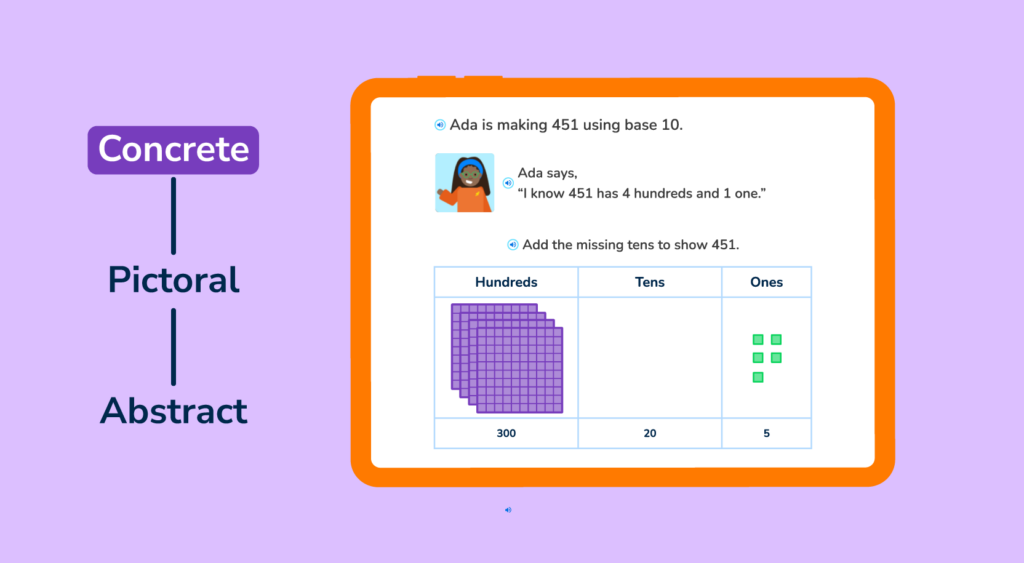
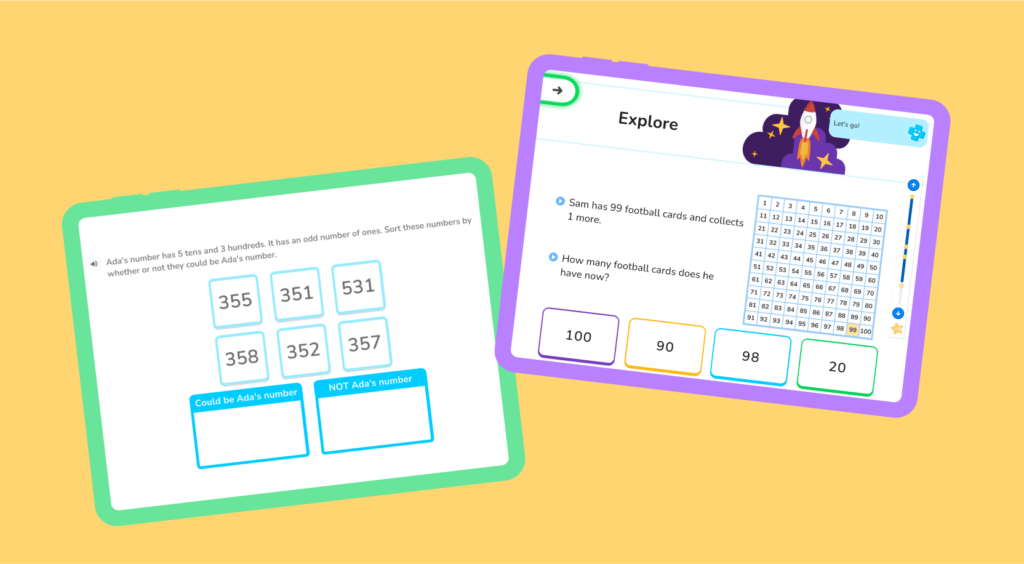
White Rose places the CPA approach at the centre of its pedagogy, and DoodleMaths mirrors this structure within our lessons and question sets.
Concrete
DoodleMaths uses interactive manipulatives such as:
These tools allow learners to explore structure and build conceptual understanding – just as they would using physical resources in class.
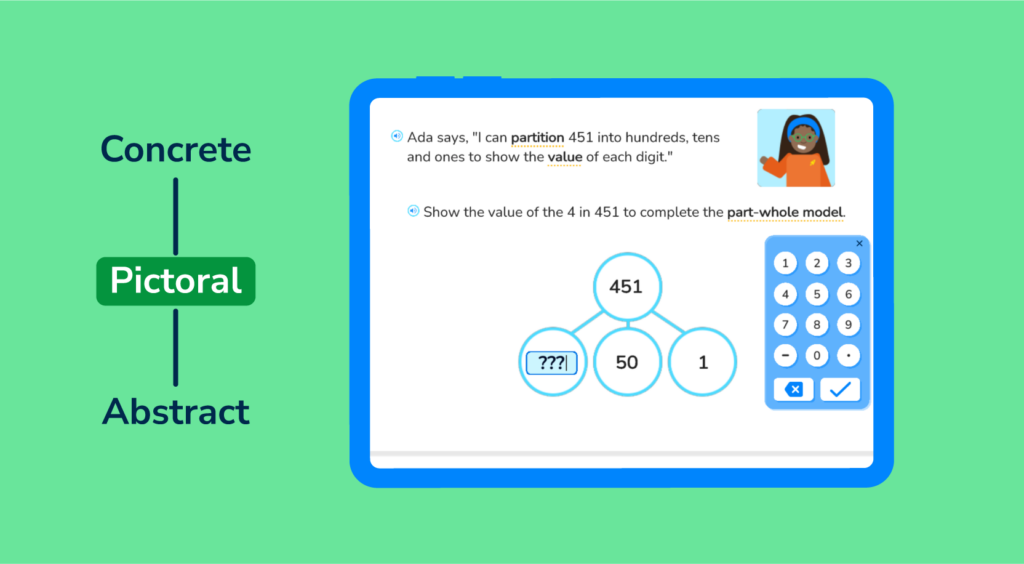
Pictorial
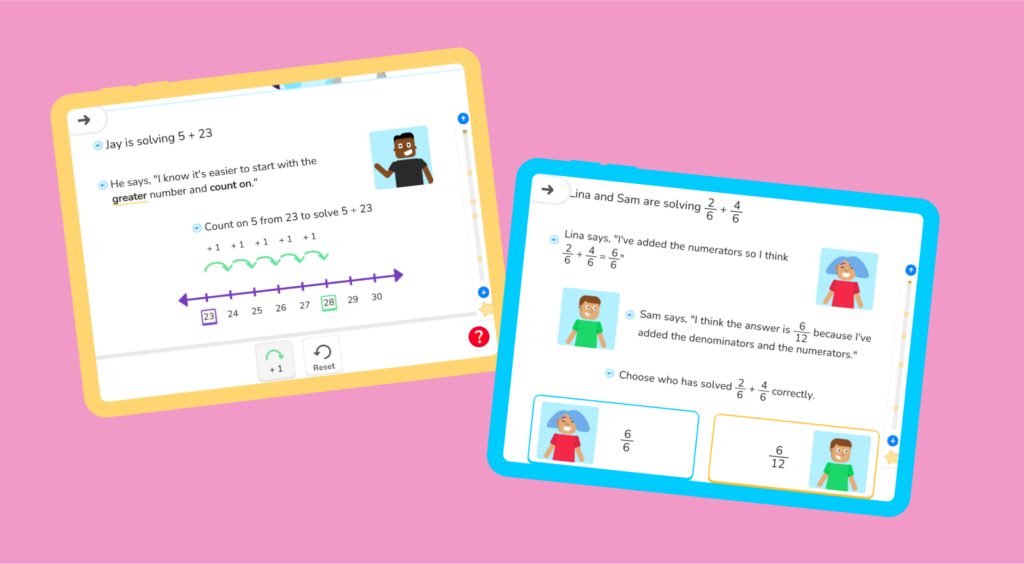
DoodleMaths transitions from concrete representations of maths concepts into well‑designed visual representations including:
These reflect the same models commonly used in White Rose, making learning feel continuous rather than disjointed.
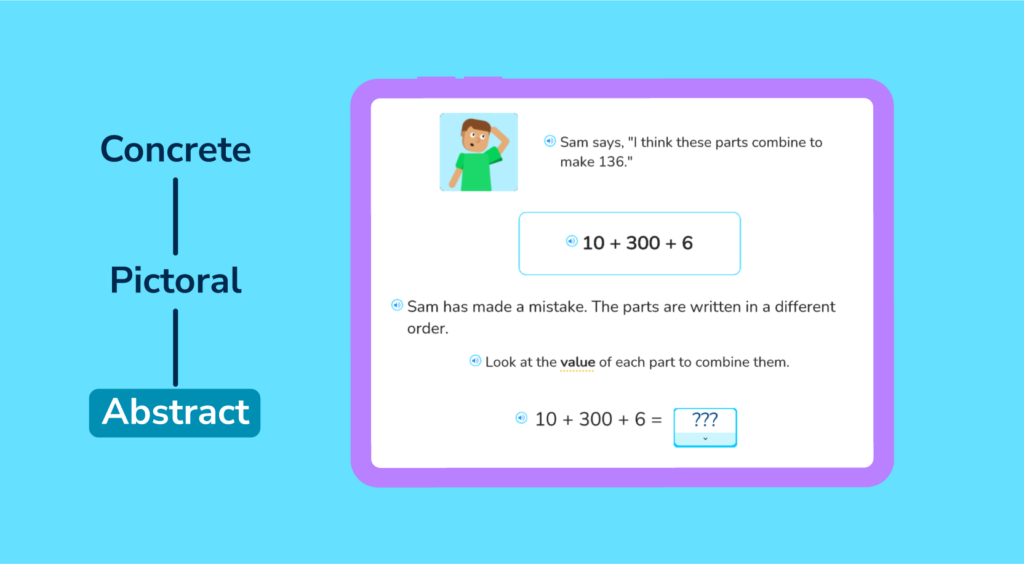
Abstract
Once children have explored the learning using concrete and visual resources, they move into using abstract representations: calculations, equations, and symbolic reasoning.
This scaffolding ensures that children develop a strong foundation for applying abstract strategies such as formal written methods and allows teachers to analyse where children’s understanding breaks down.
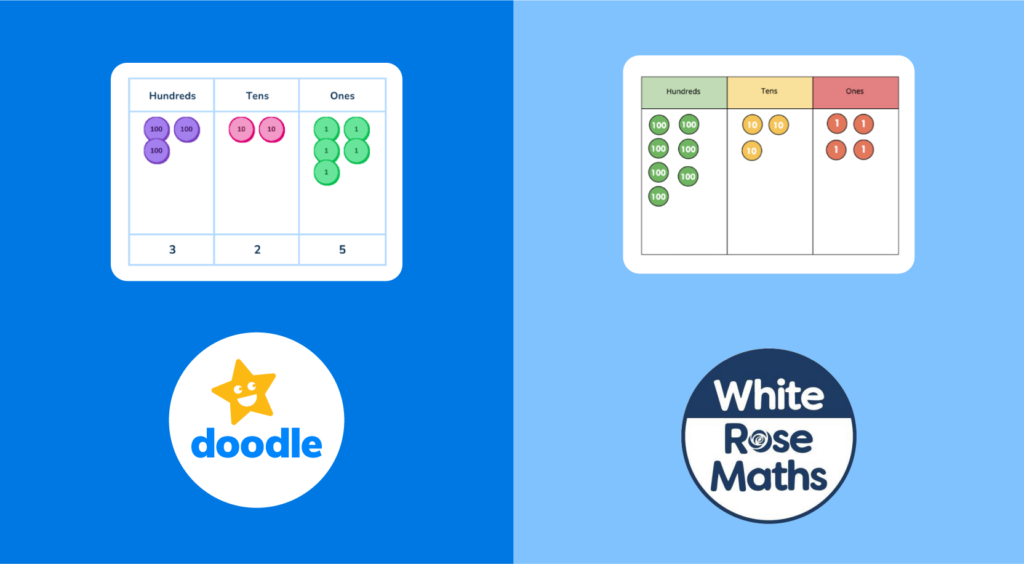
One of the challenges teachers often experience is the inconsistency between the representations used in class and those used in digital tools. This can cause confusion for children, particularly those who need clear structures to support their thinking.
DoodleMaths avoids this problem by mirroring many of the representations pupils see in White Rose lessons. For example, children encounter:
This familiarity strengthens understanding and helps pupils make connections between different concepts. When children practise independently, whether at home or during a small‑group session, the models feel like an extension of classroom teaching rather than an unrelated experience. When they encounter tools, concepts and strategies in multiple places, their confidence in their maths ability grows.
White Rose lessons are broken into small, sequential steps designed to build secure understanding over time. DoodleMaths takes the same approach.
Every Doodle lesson focuses on a single objective, broken down into manageable chunks. These steps:
This is particularly helpful for:
Teachers can also assign specific concepts to individuals or groups, allowing you to target learning without creating extra planning workload.
White Rose emphasises fluency, reasoning, and problem solving throughout its curriculum. DoodleMaths supports this balance by offering a wide variety of question types and levels of challenge.
Fluency
DoodleMaths uses spaced retrieval, a highly effective, research-based technique that requires active recall of information at increasing intervals over time. Because the app adapts to each child, pupils revisit key concepts, fact and methods at just the right time to strengthen long-term retention.
Reasoning
Questions may ask pupils to:
Just as White Rose lessons encourage mathematical talk, DoodleMaths encourages children to think conceptually. Whether they are working independently or using DoodleMaths questions as a prompt for discussions, children are encouraged to pause and think about their reasoning behind an answer.
Problem Solving
Real‑life contexts, multi‑step questions, and progressively complex problems mirror those encountered in White Rose classroom tasks. This ensures children develop flexible, transferable problem-solving skills.
The built‑in DoodlePad provides space for working out, helping reduce cognitive load and supporting children to choose strategies independently.
White Rose prioritises the explicit teaching of mathematical vocabulary and sentence structures. To complement this, DoodleMaths integrates mathematical talk in several ways:
Age‑appropriate glossary
Children can access definitions of key terms directly within the app, reducing misconceptions and providing immediate support to enhance and build mathematical language.
Modelling mathematical language
Our host of Doodle characters, Idris, Lina, Sam, Ada and Jay, model:
This promotes metacognitive habits and gives all learners, especially those who struggle with language, the scaffolds they need to communicate mathematically.
A growing number of children experience maths anxiety. DoodleMaths addresses this through:
By normalising mistakes and celebrating effort, the programme echoes the growth-mindset messages embedded throughout White Rose guidance.
Every Doodle lesson is linked directly to a National Curriculum objective from EYFS to Year 6. For teachers following White Rose, this makes it easy to:
Assignments can be filtered, easily accessed and previewed on the Teacher Dashboard, reducing admin time and making it straightforward to support pupils at their exact point of need.
Teachers tell us that DoodleMaths fits seamlessly into classrooms using White Rose. Popular uses include:
Before the lesson
Assigning prerequisite lessons so children arrive ready to learn.
Assigning a lesson to assess understanding before a White Rose small step or block is taught.
During the lesson
Using the concept explanations to support front-of-class teaching and assigning follow-up lessons for independent practice.
Assigning lessons after teacher input to practice the taught skill, on an individual or whole-class basis.
After the lesson
Setting targeted homework so pupils consolidate the small steps taught that week.
Repeating the assignment to assess knowledge and progress.
Interventions
Providing highly tailored practice to address gaps.
In Key Stage 1
Using representations children recognise to support early number sense.
In Key Stage 2
Providing variety in methods, strategies and problem types.
DoodleMaths and White Rose share the same vision for mathematics education: deep understanding, strong number sense, confident problem solving, and equitable access for every learner.
By combining the structure and richness of White Rose classroom teaching with DoodleMaths’ adaptive, engaging practice, teachers can:
DoodleMaths doesn’t replace teaching – it strengthens it. Together, White Rose and DoodleMaths offer a robust, aligned, and confidence-building approach to maths learning for all.
Explore Doodle further!
Our no-obligation consultations with our Education Consultants, all former teachers themselves, are a great way to see how Doodle could work in your school
Book a chat with our team
If you’d like to use Doodle’s browser version, please visit this page on a desktop.
To log in to Doodle on this device, you can do so through our apps. You can find out how to download them here: